

China just deployed its Anti-Sanctions Law for the first time against the United States. The target: five Chinese refiners hit with US penalties for allegedly buying Iranian crude oil. The message from Beijing’s Ministry of Commerce was unambiguous. Ignore the American sanctions.
Then, almost immediately, Chinese banks received a different kind of signal. Pause new loans to those same refiners. If you’re confused by the contradiction, you’re paying attention.
The legal chess match
On April 24, the US Treasury sanctioned five Chinese refiners, including Hengli Petrochemical, under executive orders designed to choke off Iran’s oil revenue. The accusation: these companies had been purchasing Iranian crude in violation of American sanctions.
Eight days later, on May 2, China’s Ministry of Commerce (MOFCOM) fired back with Announcement No. 21. It invoked the country’s Anti-Sanctions Law, a statute passed in 2021 but never actually used against US measures until now. The directive told Chinese entities to disregard the American penalties entirely.
The law creates a legal framework allowing the affected refiners to sue foreign parties that comply with US penalties in Chinese courts. Any global company that cuts ties with these refiners to satisfy Washington could find itself dragged into a Beijing courtroom.
For multinational corporations operating across both jurisdictions, this creates a compliance dilemma: follow US sanctions and risk Chinese litigation, or follow Chinese counter-sanctions and risk American penalties.
The banking paradox
Reports indicate that Chinese banks have been instructed to pause new lending to the sanctioned refiners, a move that directly undercuts the bravado of the Anti-Sanctions Law invocation.
Chinese banks, many of which have significant dollar-denominated operations and correspondent banking relationships in the US, can’t afford to be caught facilitating transactions that Washington considers illegal. The result is a two-track policy: the public track says defiance, the private track says caution. Chinese refiners are caught in the middle, told by their government to keep operating normally while simultaneously losing access to the financing that makes normal operations possible.
Summit positioning
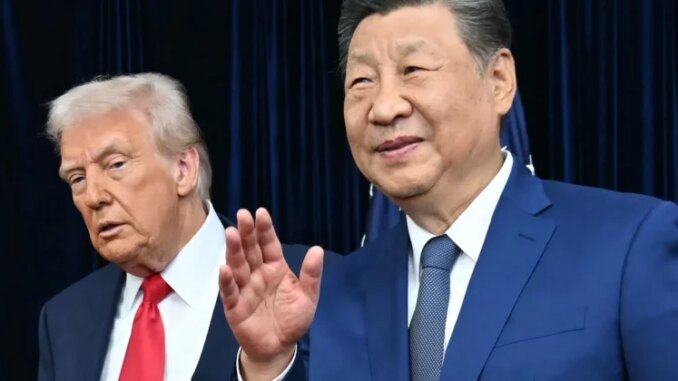
All of this is happening days before a scheduled meeting between President Trump and President Xi Jinping. Market analysts widely interpret China’s Anti-Sanctions Law deployment as a bargaining chip, not a permanent policy shift.
President Trump has praised US-China economic ties following the announcements, a signal that both sides may be posturing rather than preparing for genuine economic warfare.
The refiners themselves face a particularly grim calculus. Hengli Petrochemical and the four other sanctioned companies must navigate a landscape where compliance with either government’s directives creates legal risk with the other. Waivers from the US side are considered likely but would almost certainly be applied selectively, creating winners and losers among the five firms.







Kommentar hinterlassen