
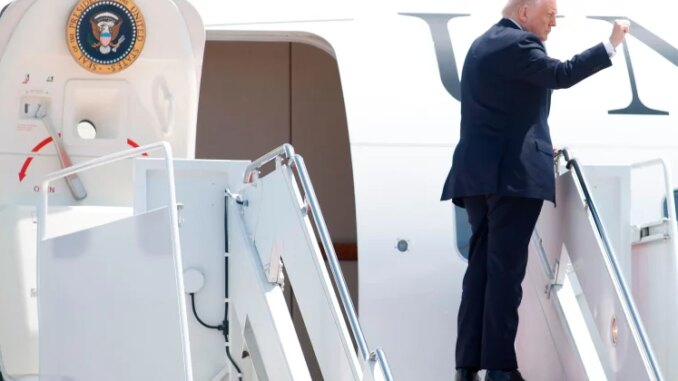

President Donald Trump stated in a CBS interview that his administration is not considering a bailout for US air carriers. The comment arrives as airlines face mounting economic pressures, and it sets up a familiar dynamic between initial White House resistance and the aviation industry’s appetite for federal support.
A pattern worth remembering
This isn’t the first time a Trump administration has drawn a line in the sand on airline bailouts. Back in early 2020, as COVID-19 was dismantling the travel industry in real time, Trump signaled a similar reluctance to open the federal checkbook for carriers.
That resistance lasted right up until it didn’t. By April 21, 2020, the administration had approved a $25B payroll support package for major airlines including American, Delta, and United as part of the CARES Act. The total aviation funding in that legislation reached $32B, earmarked to preserve 2019 payroll levels across the industry.
Airlines had initially requested a combined $55B in federal assistance, nearly double what they ultimately received. The gap between ask and offer created weeks of tense negotiations, during which airline stocks whipsawed violently. Share prices cratered before the aid was confirmed, then surged once the deal was announced.
Why the 2020 playbook matters now
The 2020 airline rescue came with strings attached, at least on paper. Aid recipients were prohibited from conducting stock buybacks or issuing dividends during the loan terms. Executive compensation was also capped.
But the execution drew significant criticism. Many airline contractors received funding for positions that had already been eliminated before the money arrived. The Treasury Department’s allocation process allowed carriers to proceed with layoffs even after receiving federal dollars, with no meaningful incentive structure to encourage rehiring.
What this means for investors
For airline stocks specifically, the signal is mixed. The 2020 sequence, where initial resistance gave way to a multi-billion-dollar rescue in a matter of weeks, is fresh enough in institutional memory that traders may not take the “no bailout” line at face value.







Kommentar hinterlassen