
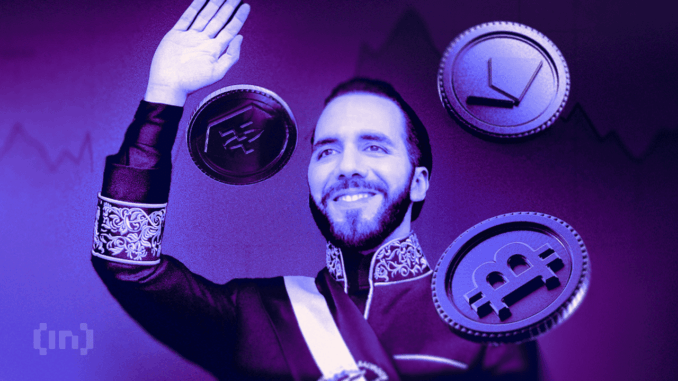

Bitcoin’s (BTC) bear market has weighed heavily on investors across the spectrum. Corporate treasuries, major whales, and even nation-state holders have all felt the pressure.
The cryptocurrency’s slide has slashed the value of El Salvador’s holdings as credit default swaps rise to a five-month high, raising concerns over the country’s IMF program and debt outlook.
Sponsored
El Salvador’s Bitcoin Bet Under Pressure as Portfolio Drops
According to the latest data from El Salvador’s Bitcoin Office, the country’s Bitcoin reserves stand at 7,560 BTC, worth approximately $503.8 million. Bloomberg reported that the portfolio’s value has fallen from around $800 million at Bitcoin’s October 2025 peak, marking a drop of nearly $300 million in just four months.

Bukele, an ardent Bitcoin advocate, has continued purchasing one Bitcoin per day. However, this strategy increases the country’s exposure to market volatility.
In contrast, Bhutan recently sold $22.4 million worth of Bitcoin. The divergent strategies of El Salvador and Bhutan reflect fundamentally different risk philosophies.

Bhutan’s Bitcoin mining operations generated more than $765 million in profit since 2019. However, the 2024 Bitcoin halving significantly increased mining costs, compressing margins and reducing returns. Bhutan now appears to be liquidating part of its holdings, while El Salvador continues to prioritize long-term accumulation.
Nonetheless, the country has also diversified its portfolio. Last month, it spent $50 million to acquire gold as demand for the safe-haven metal rose amid macroeconomic tensions.
IMF Loan Talks Face Strain Over El Salvador’s Bitcoin Policy
El Salvador’s deepening commitment to cryptocurrency has impacted relations with the International Monetary Fund. The government’s continued Bitcoin purchases, combined with delays in implementing pension reforms, have complicated the country’s IMF agreement.
Sponsored
The Fund has expressed concern about Bitcoin’s potential impact on fiscal stability. A disruption to the IMF program would weaken one of the key supports behind El Salvador’s sovereign debt recovery. Over the past three years, the country’s bonds have returned more than 130%, making them one of the standout turnaround stories in emerging markets.
“The IMF may take issue with disbursements potentially being used to add Bitcoin. Bitcoin being down also doesn’t help to ease investors’ concerns,” Christopher Mejia, an EM sovereign analyst at T Rowe Price, told Bloomberg.
The IMF approved a 40-month Extended Fund Facility on February 26, 2025, unlocking about $1.4 billion in total, according to official IMF documentation. The first review ended in June 2025, with $231 million disbursed.
However, the second review has remained on hold since September, following the government’s delay in publishing a pension system analysis. During that period, El Salvador continued to add to its Bitcoin reserves despite repeated warnings from the IMF.
Sponsored
A third review is scheduled for March, with each review tied to additional loan disbursements.
“The continued purchase of Bitcoin, in our view, does create some potential challenges for the IMF reviews. The market would react quite poorly if the anchor provided by the IMF were no longer present.” Jared Lou, who helps manage the William Blair Emerging Markets Debt Fund, said.
Meanwhile, bond markets are signaling rising concern over El Salvador’s fiscal outlook. Credit default swaps have climbed to a five-month high, reflecting increasing investor anxiety about the country’s repayment capacity.
According to data compiled by Bloomberg, El Salvador faces $450 million in bond payments this year, with obligations increasing to nearly $700 million next year.
El Salvador’s Bitcoin policy now sits alongside key fiscal and IMF negotiations. The outcome of upcoming IMF reviews and the country’s bond repayment schedule will play a significant role in shaping investor confidence and the sustainability of its debt trajectory.







Kommentar hinterlassen